Recovery Guy and Positive Self-Talk
Thanks for joining us for The Check Up. Today we are going to discuss the importance of positive self-talk, as it relates to recovery. My dear friend Wendy gave me the idea for today’s show. Wendy has 2 ½ years of recovery and I appreciate how she can help me remember what it was like as a newcomer.
We come from a place of such negativity and bad experiences, before recovery. Obviously, most of the negativity and bad experiences were of our own making. Nevertheless, we carry so much of the negative emotion and baggage into recovery. We might be getting physically sober and clean, but so much our life can still be filled with a poor self-image.
So much of this comes out as we, in recovery, can remain our own worst enemy. The thoughts of all the people we harmed and things that we did can haunt us well into or recovery. Shaking that negativity perspective can often be as difficult as getting sober, and at times more difficult.
Most all relapses occur because of our inability to let go of yesterday and focus on today. One of the biggest challenges to letting go of the past is how we refer to ourselves. Recalling and even reinforcing past views of ourselves is based upon behavior and choices that are no longer part of our life.
Until we recognize we aren’t the same person and begin referring to ourselves as such we stand very little chance of enjoying this new life we have chosen. We must remember that the person we referred to in such negative thoughts is no longer alive. The sober version of us has emerged and taken its place.
Learning how to recognize the amazing accomplishment we are undertaking in the first step seeing us for who we are not who we were. Once we begin seeing the new man/woman we can then begin referring to ourselves as a person of accomplishment. We can then see ourselves as the person we always wanted to be without the substances.
We begin living in the belief that we have been transferred and we are a person of great value and capable of doing great things. Please let me know how I can further assist you as you begin this journey of recovery and your desire to understand the value and power of positive self-talk in recovery.
Posts by Robert
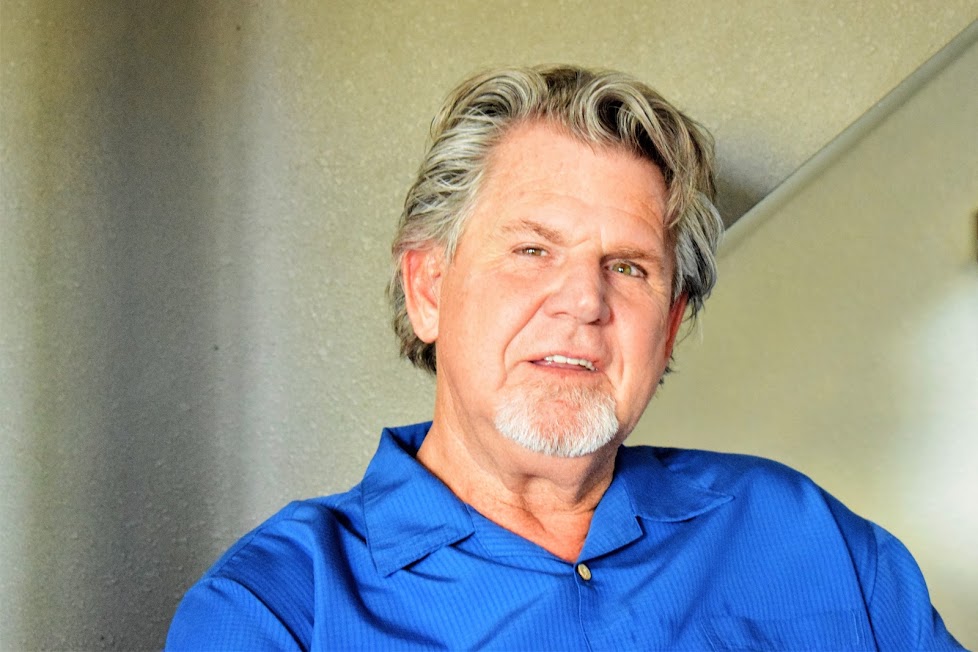
Robert is the Recovery Guy. Getting clean and sober on April 25, 1986 has given me the insight and practical skill set to not only stay sober, but to also re-invent myself to the person I always wanted to become. Showing others how to do this is my life goal.
Episode #30 – Monday The Fix: Recovery Paradigm part 2
Recovery Guy Podcast
“The Fix”
airing every Monday
Recovery Paradigms
Welcome to recovery guy podcast. This is an episode from “The Fix” that airs every Monday. Today’s episode is part two of two on recovery paradigms. In this episode, I picked up from where I left off last week. If you remember last week we looked at what is a recovery paradigm, a practical example of the recovery paradigm how paradigms affect us negatively and positively, the need to identify the erroneous paradigms.
We then transitioned into remove or displaying paradigms that are not consistent with our direction, commitment or overall environment. Once we get these things we were able then to discover new recovery paradigms, examine if they would be a good fit, adapting these new positive paradigms while making sure they keep us in alignment with our current or future commitments.
I believe when we do this we elevate our thinking which enhances our behavior. Our new behavior in turn validates this new paradigm or advanced paradigm. The program of recovery is more about the journey than it is about the destination. If we do not allow our thinking to evolve with a new positive approach or a more refined version of what we are currently doing, then we cannot move forward.
To keep an idea that would lack effectiveness doesn’t make sense and would keep me from accessing a higher-level recovery paradigm. The challenge people of recovery staying in the same place will eventually cause us to move backward. I find that very dangerous for a person of recovery, such as myself. Matter of fact, referring to last Thursday’s The Check Up podcast (recovery stagnation) staying in the same place can cause us to become emotionally, spiritually, and or physically stagnant. We won’t stay stagnant for long. We either get better or we get worse.
I hope you enjoy Part 2 of 2 on Recovery Paradigms. Please join us on Podbean, ITunes Podcast, Spotify, Stitcher and Google Play. We have fresh content every Monday and Thursday
Episode #29 – Special Q&A: Slow Will Part 2
Slow will part 2 Enjoy!
Episode #28 – Thursday The Checkup: Stagnation
How to avoid STAGNATION in your recovery.
Stagnation is defined as the state of being still, or not moving, like a sitting puddle of water where stagnation attracts mosquitoes.
The root of stagnation is the Latin word for “standing water,” stagnatum.
Stagnation refers to the failure to find a way to contribute. These individuals may feel disconnected or uninvolved with their community and society.
A rut is often a result of stagnation and is a habit or pattern of behavior that has become dull and unproductive and it is often hard to change.
In recovery over addiction and other behavioral challenges, stagnation can be very precarious.
Most all of us, at one time or another, hit a snag or get slowed down. This is often a temporary event and we get moving again rather quickly.
Stagnation in personal recovery can get dangerous because it can cause emotional pain and mental frustration. When we experience this type of pain/frustration it can lead to a spiral and a subsequent relapse.
How do we get out of the Rut or reverse the stagnation?
1. Decide we don’t want to be there anymore
2. We need to take our own inventory in the 4 dimensions consisting physical, emotional, mental and spiritual. If you find it is more than one dimension focus on the one that will likely influence the other.
3. It is often very helpful to bring in a trusted person who can help you stay objective
4. Put together a course of action
5. Follow said course
6. Monitor progress while adjusting as you move forward
When we implement these notions and activate the steps we will have the results we work for.
Episode #27 – The Monday Fix: Recovery Paradigm
Today’s podcast is on paradigms. I was first introduced to this term back in 1993. I was seven years into my personal recovery and was looking for a way to grow beyond the material I was currently involved with. That material was working; it was just I wanted more. I knew there was more out there for me to go get it, I just didn’t know what it looked like or how to find it. A friend of mine had introduced me to Stephen Covey. Stephen had just produced “principle centered leader ship”. It was the first time I had heard about a paradigm. Interestingly enough it was exactly where I wanted to be and what I wanted to understand. I was looking for a new way of thinking. This is what this podcast is all about. In this podcast, I laid the groundwork for next week’s podcast. I asked some questions, I introduce the listeners to terminology and I challenge us to come back with our own answers. Quite simply a paradigm is a standard or a set of ideas a paradigm is simply a way of looking at something the word as I am reading the definition from vocabulary.com it’s that it comes up a lot in academic scientific and business world we’re going to look at it from a psychological, behavior and internal position. I like what Mr. Covey says in that a paradigm is a “mental map”. Like any directions they are best accompanied by a map. The more defined and accurate the map the more likely I am to get from point A to point B. In this podcast, I asked the questions, what is a paradigm, list some practical examples of paradigms, how they affect us negatively and positively, identifying erroneous paradigms, removing/display paradigms that aren’t consistent with our direction, commitment or environment and finally how to adopt new positive paradigms that are in alignment with our direction/commitment/environment. Once we address these we will then have a fuller understanding of Why we are at where we are at with our present thinking, if it’s not where we want to be, then what paradigm change do I need to make to get there. I hope you enjoy the podcast. I hope you have a wonderful day.

Becoming Well Now is Now Recovery Guy
B...
Episode #26 – Special Q&A: Slow Will Part 1
From deep inside the Recovery guy vault.
Episode #25 – Thursday The Checkup: Step by Step
Today we cover a tried and true method of ensuring that the check up is thorough.
Episode #24 – Monday The Fix: Gratitude
Gratitude is the fuel that helps determine the course of my life.
Episode #23 – Special Live Series: Hemet
The key to teamwork is putting the WE before ME.
Episode #22 – Thursday The Checkup “Suzy says”
Making sure our entire home is in order when it comes to others.
Episode #21 – Monday The Fix
A universal approach to becoming the best possible version of self.